Long-Term Money
Morgan Housel opens with a fact that resets everything: Adam Smith wrote that it was common in 18th-century Scotland to meet a mother who had borne twenty children and had not two alive. Queen Anne of England had 18 children. Not one made it. Today we complain about grocery stores having too many options. The piece is a meditation on how profoundly life has improved in ways so total and complete that we've lost the ability to see them as progress. The compounding of human knowledge across generations is the most underrated investment thesis of all time, and this piece makes that case better than almost anything I've read.
A Navy SEAL Breathing Technique to Stay Calm and Focused
Former Navy SEAL Mark Divine's box breathing method has been around for years but I keep coming back to it. The technique is almost embarrassingly simple: inhale for four counts, hold for four, exhale for four, hold empty for four. What I find interesting is the physiology behind it. At 16 to 20 shallow breaths per minute, most people are running their nervous systems slightly hot all day. Slow that to five or six full breaths and you're running a completely different operating system. Divine practiced this standing in line, sitting in traffic, before workouts. The point isn't that breathing is magic. The point is that you have a direct line to your autonomic nervous system and almost nobody uses it.
The 12-month window
On a recent episode of No Priors, investor Elad Gil made an observation that's worth sitting with: for most companies there is roughly a 12-month period where the business is at peak value, and then it crashes out. Lotus, AOL, Mark Cuban's Broadcast.com all caught that window. A lot of great companies didn't. This matters especially right now because a significant portion of today's AI startup landscape exists because the foundation models haven't expanded into their category yet. As founders openly acknowledge, that won't last forever. The question for everyone building in this space is: do you know which phase you're in?
More …
In the summer of 1997, I was a premed student at NYU with a secret: I was way more interested in computers than cadavers. So when I landed a research internship at NASA's biology labs at Kennedy Space Center in Cape Canaveral, Florida, I told myself it was the perfect compromise. Computers AND biology. Science AND technology. Mom would be proud.
I was twenty years old, riding a Greyhound-style bus from the intern housing to the Space Center every morning, wearing my NASA badge like it was a backstage pass to the future. Which, in a way, it was. I just didn't know it yet.
More …
If you looked at my investment history with no context, you'd think I have the attention span of a golden retriever at a tennis ball factory. Impossible Foods. Athletic Greens. SandboxAQ. Cirkul (the flavored water bottle that Gen Z can't put down). Flexport. Canyon Bikes. Kraken. A real estate portfolio spanning Santa Monica to Brooklyn. And yes, infant nutrition.
But here's what I've learned after building two companies, exiting both, writing a book, and deploying capital across more than fifty startups: every single investment decision I make runs through the same pattern recognition engine. And that engine was built, improbably and irreversibly, in the New York City nightlife scene of the late 1990s and early 2000s.
Let me tell you what I mean.
More …
Who do you trust to tell you what's good?
We are drowning in recommendations and somehow more lost than ever. Algorithms have gotten very good at predicting what you might click next based on what you already clicked, but that is not the same thing as taste. This piece makes a compelling case that the most valuable signal is still just a real person with a genuine point of view sharing something they love, and that the personal context behind a recommendation is what makes it worth anything at all. It left me thinking about how much I trust the people I actually know over any platform that claims to know me.
Freedom is not the highest form of wealth
The author spent two years with genuine freedom and came back with a counterintuitive conclusion: meaning is the highest form of wealth, not freedom. His argument is that the pursuit of freedom provides its own meaning, but once freedom is actually achieved it loses that meaning entirely. What you're left with is an existential "now what" that nobody warned you about. I found this one genuinely thought-provoking, especially for people at a stage where they've already won the financial game and are figuring out what the next chapter is actually for.
The human work behind humanoid robots is being hidden
This MIT Technology Review piece should be required reading for anyone investing in physical AI. The argument is that the humanoid robotics industry is quietly obscuring how much human labor is still required to make these machines look autonomous, and the parallel to Tesla's early Autopilot branding is hard to ignore. Workers spend weeks in VR headsets and motion capture suits performing repetitive tasks just to generate training data, and remote operators step in when robots get stuck in ways the demo videos never show. The gap between what these companies are demonstrating and what is actually happening operationally is significant.
More …
The Anthropic Hive Mind
Steve Yegge spent years as a senior engineer at both Google and Amazon, so when he says something unusual is happening at Anthropic, it's worth paying attention. His argument isn't just about the models. It's about the organizational culture, the caliber of people, and the way the company thinks collectively. Interesting read regardless of where you stand on the AI race.
Meet the Startups Trying to Build Military-Specific AI
A wave of veteran-founded startups is now building AI trained exclusively on military and combat data, designed to work without cloud connectivity in denied environments. Companies like Smack Technologies just closed a $32M seed round on this thesis. The bet is that the Pentagon will never fully trust a general-purpose model for critical decisions, and that purpose-built systems are the only real path to adoption.
How to Design a More Meaningful Life
Dave Evans and Bill Burnett, the Stanford professors who wrote Designing Your Life, join Dr. Laurie Santos on The Happiness Lab to make the case that major life decisions shouldn't be planned, they should be prototyped. The idea is to treat your own life like a design problem: run small experiments, iterate, and let the data tell you what works. Practical in a way that most self-help conversations aren't.
More…
AI agents are starting to eat SaaS - Martin Alderson
We spent fifteen years watching software eat the world. Entire industries got swallowed by software - retail, media, finance - you name it, there has been incredible disruption over the past couple of decades with a proliferation of SaaS tooling. This has led to a huge swath of SaaS companies - valued, collectively, in the trillions.
The Simple Path to Wealth: Your Road Map to Financial Independence and a Rich, Free Life
The Simple Path to Wealth by J.L. Collins is a popular personal finance book that offers a straightforward guide to achieving financial independence through simple, long-term investing strategies, focusing on low-cost index funds and avoiding complex financial products. It provides actionable advice on debt elimination, retirement accounts (like 401(k)s, IRAs, and HSAs), and asset allocation, all presented in an accessible, often humorous style, based on the advice Collins gave his daughter.
Swearing Can Actually Be Good For You, According to New Research
Dropping an F-bomb can boost your performance by helping you feel stronger, more focused, and disinhibited, say scientists. Most who curse like a sailor know that letting out a swear word in a moment of frustration can feel good. Now, new research by psychologists suggests that it really can be good for your well-being.
More …
How Not To Die - Chris DeMuth Jr
Vittorio is a biotech accelerationist and thinker exploring reality, how to transcend biology, and truth. He shares the science of how not to die, or at least how to live well, and his thoughts on human potential.
Doubling Down on your Winners
If a company is performing well (and communicating well), continue to invest in subsequent rounds. That follow-on capital can be just as important to overall fund returns as the initial investment.
18 months of Reflection - Sanjeev Agrawal
A personal essay detailing the author's deep introspection on life, career, and values after a major transition. It re-evaluates the pursuit of traditional achievement, noting that true joy was more often found in moments of physical mastery than in financial success.
More …
Certainty After Chaos – The Raw Founder
A personal reflection on navigating uncertainty and the critical importance of internal grounding in leadership, especially after experiencing professional or existential chaos.
Do Microwaves Destroy Nutrients?
This piece examines the persistent myth that microwaving food ruins its nutritional value and explains why it's often one of the healthiest cooking methods due to shorter cooking times and less water.
The Illusion of Progress
This article delves into the concept that not all advancements are truly beneficial, challenging the conventional belief that progress is inherently good and always leads to a better world.
More …
In Praise of Being Yourself
Entrepreneur Fabrice Grinda shares an essay on authenticity, personal freedom, and the importance of living life on your own terms.
This Aromatherapy Expert Swears It’s Life-Changing
Explores how natural scents may influence mood, stress levels, and even memory. Experts weigh in on the benefits of aromatherapy in our daily lives.
Can You Trust a Man by His Clothes?
A stylish and philosophical piece analyzing how fashion influences perception, trust, and identity in modern society.
More …
Gut Microbiome, Microbes & Mental Health: The Science of Stress
Emerging research shows that the microbes living in your gut may influence your stress levels, mood, and overall mental well-being. This article explores the gut-brain connection and the new wave of therapies aiming to improve mental health by targeting gut bacteria.
The 40-70 Rule: How to Make Decisions
A breakdown of General Colin Powell’s 40-70 decision-making framework: act when you have 40–70% of the information. It helps leaders avoid analysis paralysis while mitigating the risks of impulsive decisions.
10 Biohacking Trends for 2026 You Should Be Watching for Now
From glucose monitoring to brain stimulation and longevity-focused supplements, this article outlines cutting-edge biohacking innovations poised to shape health optimization in the near future.
More …
Sol Price: The Godfather of Costco, Walmart, and Modern Retail
Sam Walton said he borrowed more ideas from Sol Price than anyone else. Jim Sinegal of Costco said, “I didn’t learn a lot from Sol. I learned everything.” Jeff Bezos studied him. Home Depot echoed him. Sol Price is the most influential retailer you’ve never heard of. A man who never sought the spotlight, but whose legacy and lessons cover the entire landscape of modern retail.
Alibaba Cloud Founder Expects Big AI Shakeup After OpenAI Hype
In a wide-ranging, exclusive interview with Bloomberg, Alibaba Cloud Founder and Zhejiang Lab Director Wang Jian speaks about AI’s future, and his career journey.
Perplexity CEO: Browser Wars and Taking on Google
What prompted him to build his own browser? Why does he think Perplexity can beat Google and become the #1 browser? Is Perplexity building an operation system?
More …
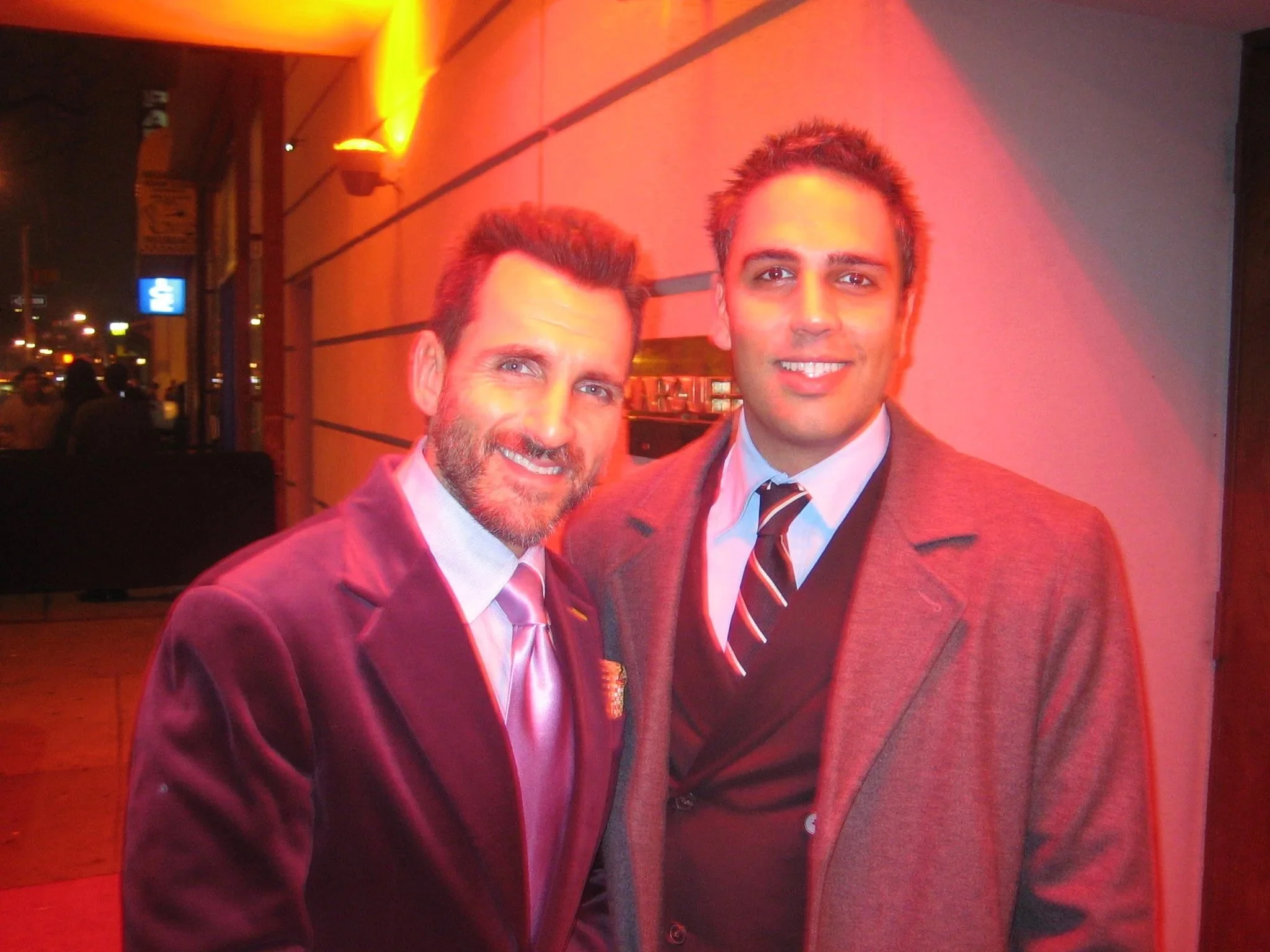
On New Year’s Eve 1990, I was 14 years old, standing outside a club in Manhattan with a VIP ticket in my hand that might as well have said “this kid does not belong here.” My black-on-black outfit was carefully calculated, sleeves rolled to just the right fold, and my suede Dr. Martens had seen maybe one other party: my friend’s bar mitzvah. I was freezing, faking, and fully convinced that if I didn’t get into that club, my life would be over.
That night, I got in. Barely. And that moment — that freezing, awkward, exhilarating, low-key fraudulent moment — is when I learned something I’ve carried through every business I’ve built and every founder I’ve backed:
Success is just getting past velvet ropes over and over again.
More …
A New Theory Could Finally Make Quantum Gravity a Reality—and Prove Einstein Wrong Researchers propose a radical approach to unify quantum mechanics and general relativity. The theory may lead to the elusive goal of quantum gravity and challenge Einstein’s well-established framework.
Why Medical Device Companies Should Be Bullish on AI
This article explores how AI is transforming the medical device industry—from diagnostics to real-time monitoring and predictive modeling.
Swarms of Tiny Nose Robots Could Clear Infected Sinuses
Scientists have created nano-sized robots capable of clearing blocked sinuses with incredible precision, offering hope to millions with chronic sinusitis.
More …
OpenAI Chairman Bret Taylor: A Vision for AI’s Future
A conversation with Bret Taylor on leadership in AI, governance challenges, and future prospects.
Larry Fink: The U.S. Deficit Will ‘Overwhelm This Country’
BlackRock CEO Larry Fink warns of ballooning national debt and its potential economic consequences.
Marc Benioff’s Race to One Billion AI Agents
Salesforce CEO Marc Benioff outlines his strategy for deploying AI agents at massive scale across enterprises.
More …
The AI Dollar Thesis
This article explores the convergence of AI and the U.S. dollar, discussing how U.S. tech companies exporting AI globally may reinforce the dollar's dominance. It offers an interesting thesis that blends macroeconomics and innovation, highlighting why software (especially AI) might become America's most important export.
Economic Uncertainty Has Never Felt This Uncertain
A Bloomberg Opinion piece that dissects the layered complexities of today’s economy. It breaks down why markets feel off balance even when data points appear solid and how uncertainty itself is being redefined.
More …
Nanowerk: Programmable Shape-shifting Materials Explores groundbreaking developments in materials that can alter their shape in response to environmental stimuli, with potential applications across robotics, biomedicine, and aerospace.
Discover Magazine: Quantum Sensors Navigate by Earth's Magnetic Field Highlights new quantum sensors that could revolutionize navigation systems by using Earth's magnetic field, eliminating the need for GPS.
Google Research Blog: Teaching Machines the Language of Biology Discusses how large language models are being adapted to understand biological data at the single-cell level, enabling breakthroughs in healthcare and biology research.
More …
Marc Andreessen: Trump, Power, Tech, AI, Immigration & Future of America
Marc Andreessen is an entrepreneur, investor, co-creator of Mosaic, co-founder of Netscape, and co-founder of the venture capital firm Andreessen Horowitz.
Paul Singer - In Good Company
This week, Nicolai Tangen sat down with Paul Singer, legendary investor and founder of Elliott Investment Management, one of the world's most influential activist investors.
Singer shares insights from his remarkable career spanning several decades, discussing how activist investing works, why companies need external pressure for change, and his philosophy of never losing money. He opens up about major investment cases, while offering sharp observations on current markets, which he sees as "just about as risky as I've ever seen."
Naval Ravikant with Chris Williamson
Naval Ravikant is an entrepreneur, investor and co-founder of AngelList. What does it mean to win at the game of life? Is it tons of wealth, pure happiness, infinite time, or a loving family?
Today we explore the timeless question of what it means to truly live well. Expect to learn the true price of success, whether sacrificing your happiness is worth it, what advice Naval would give to his younger self, what the true source of unhappiness is for most people, how to overcome low self-esteem, what Naval would add to his ‘How To Get Rich’ thread, how to become comfortable being unapologetically selfish, what Naval sees as the next big trends in science and technology, his take on the escalating culture wars, how to get comfortable with death and overcoming grief, the best and worst ways to spend your wealth and much more.
More …
When I was a student, the narrative around education was straightforward: study hard, secure a degree from a good college, perhaps attend grad school, and the world would open its doors to you. Whether it was medicine, engineering, law, or business, these paths promised stability and a prosperous career.
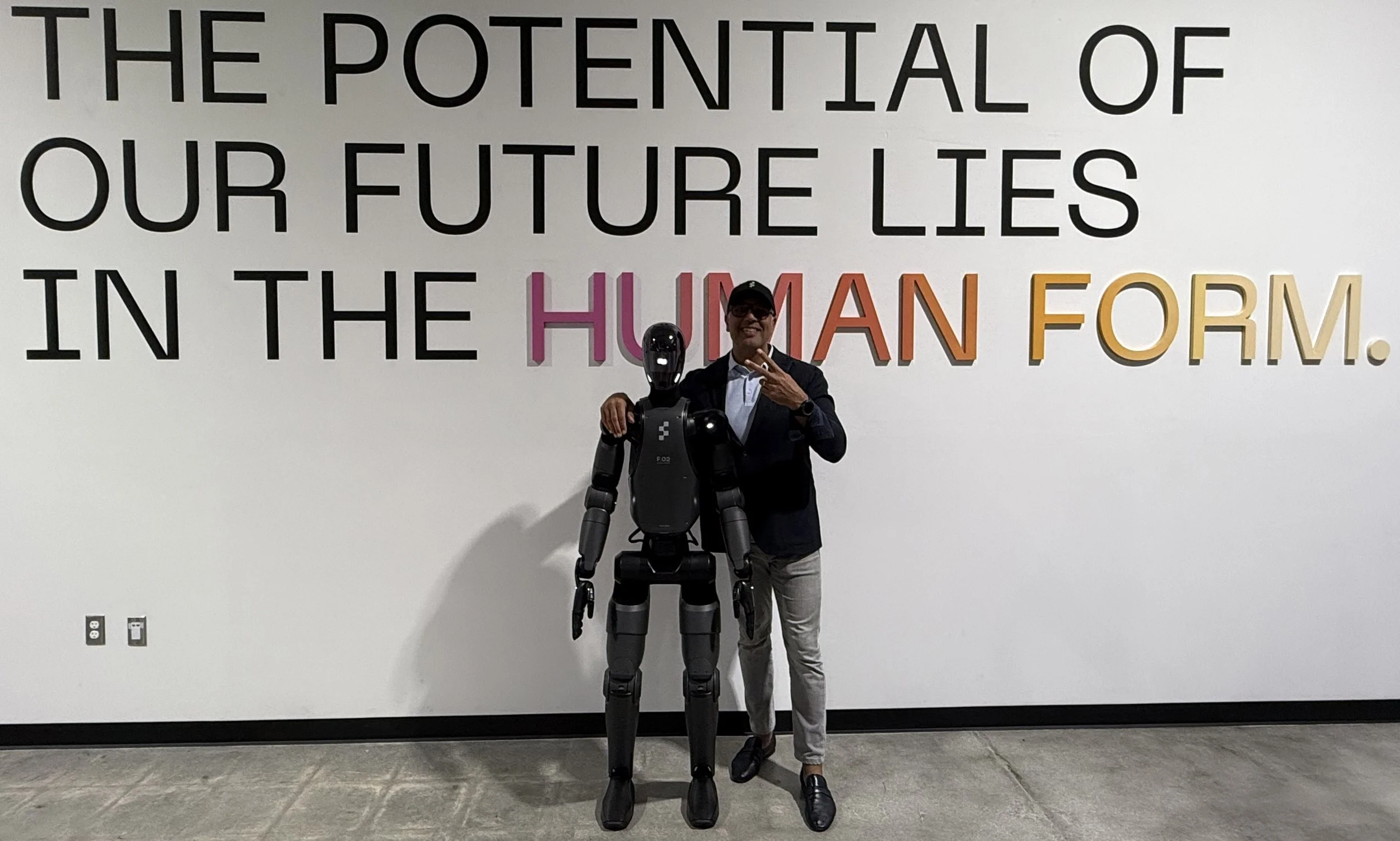
Fast-forward to today, and we're on the verge of a seismic shift driven by advancements in AI, humanoid robotics, and super-intelligent autonomous agents. As someone deeply involved in technology investments and having witnessed firsthand the rapid acceleration of innovation—like humanoid robotics company FigureAI, which was just a dream a couple of years ago and is now on the cusp of reshaping entire industries—I often reflect on how the educational paths we once trusted are being dramatically reshaped.
If I were entering college or grad school today, knowing what I know now about the trajectory of technology, I’d think carefully about not only what subjects I study but the skill sets I cultivate.
More …
Seth Godin on Playing the Right Game and Strategy as a Superpower
Seth Godin is the author of 21 internationally bestselling books, translated into more than 35 languages, including Linchpin, Tribes, The Dip, and Purple Cow. His latest book is This Is Strategy.
Amit Kukreja - Brett Adcock: Humanoid Robots
In less than three years since its inception, Figure has built versions 01 and 02 of their humanoids, developed a foundation model called Helix AI to reason like humans, and shipped robots into the factories of their commercial customers.
More …
Is The Wellness Boom Reshaping Global Commercial Real Estate?
An analysis of how the wellness trend is transforming commercial real estate, with projections for significant growth in the coming years.
Mastering the art of decision-making
This piece discusses five steps to develop powerful next-gen decision-makers and how organizations can proactively enable better decision-making in future leaders.
2025: The Emergence of the New Zeitgeist?
An exploration of culture-shifting moments and their impact on future trends, discussing topics from Bitcoin to wellness.
More …